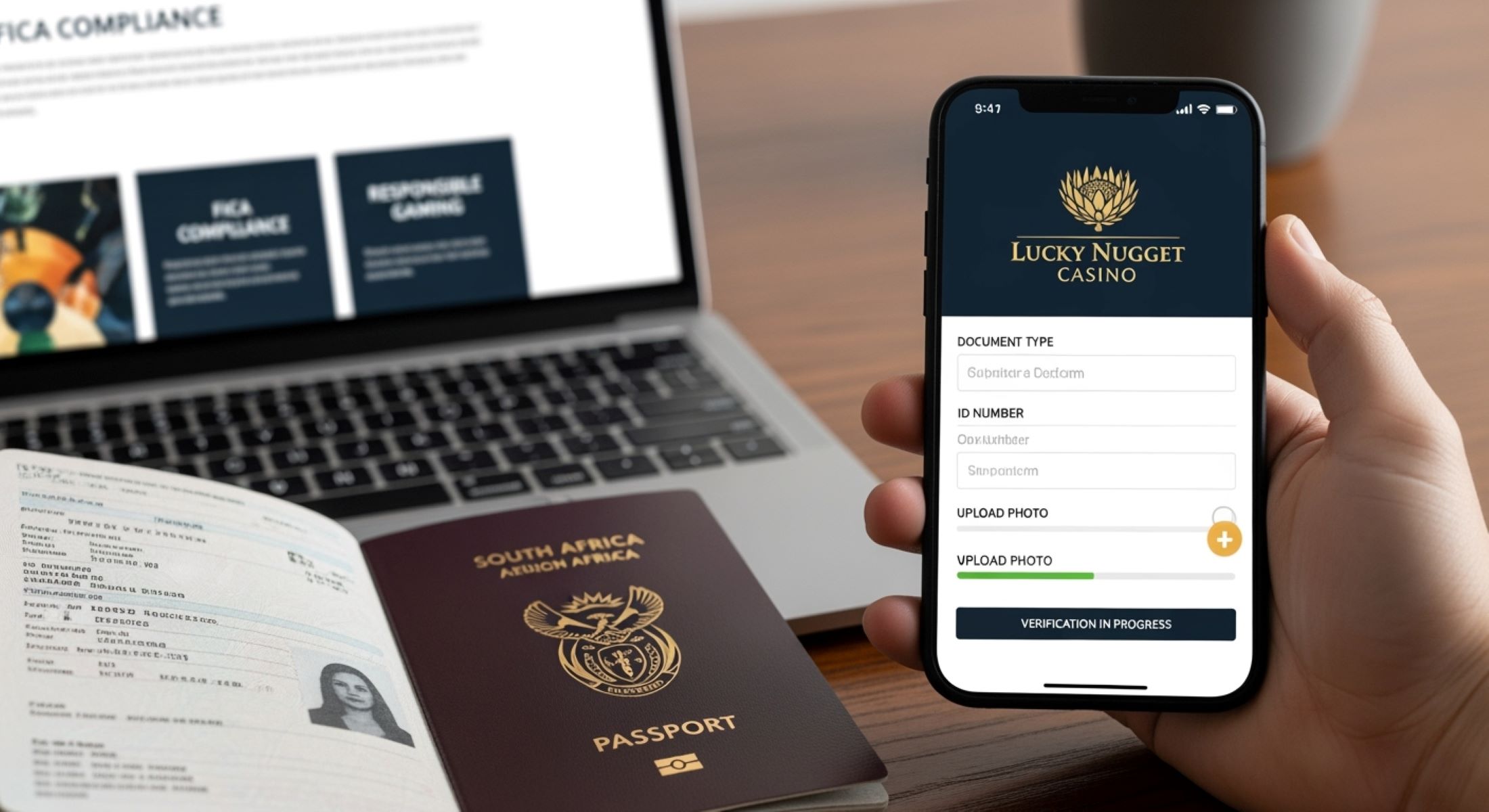
Before you can hit that “Spin” or “Bet Now” button at any legit South African online casino, there’s a step that can’t be skipped: verification. It’s not just some boring red tape—it’s the backbone of secure, fair online gambling. If you’re wondering what it involves, why it’s needed, or how long it takes, you’re in the right place. Let’s unpack the whole process step-by-step. This guide will give you the inside scoop so you’re never caught off guard again.
Why Is Verification Even Necessary in South African Casinos?
Think of the verification process as your digital ID check—it’s the crucial first step that online casinos use to confirm your identity before letting you play. This isn’t just a formality or an annoying hurdle; it’s a protective measure for both the player and the casino. When you sign up, casinos need to ensure that you are truly who you say you are. This helps prevent identity theft and fraud, which can happen when someone tries to use fake or stolen information to create accounts. Verification acts as a safeguard, making sure that every player is genuine and not hiding behind a false identity.
Another key reason for verification is to make sure you’re legally allowed to gamble. In South Africa, the legal gambling age is 18, and online casinos must comply with this rule strictly. By verifying your documents, casinos check your age and prevent underage gambling, which is a serious offense with legal consequences. This step protects young people from the risks associated with gambling and helps casinos maintain a responsible gaming environment. It’s more than just ticking a box—it’s about promoting safe and lawful play.
Verification also plays a critical role in fighting financial crimes like money laundering. Casinos are often targeted by criminals trying to ‘clean’ illegal money by funneling it through gambling accounts. To stop this, South African casinos follow strict regulations requiring them to identify their customers and monitor suspicious transactions. This means verification is not only about who you are and how old you are, but also about making sure that the money coming in and out of the casino isn’t linked to illegal activities. It’s a responsibility casinos take seriously, as failure to comply can lead to hefty fines or losing their licenses.
Finally, the legal framework governing online gambling in South Africa makes verification mandatory. Casinos licensed by the National Gambling Board (NGB) or other regulatory bodies must enforce strict Know Your Customer (KYC) and Anti-Money Laundering (AML) procedures. This ensures that online casinos operate transparently and responsibly, protecting both players and the integrity of the gambling industry. Without these checks, the entire system would be vulnerable to abuse, risking players’ safety and the reputation of the market. Verification is not just a formality; it’s the foundation for a secure, fair, and trusted online gambling experience in South Africa.
When Does Verification Happen?
Verification in South African online casinos can occur at various points during your gaming journey. Here’s a detailed list of common situations that trigger the verification process:
- When you attempt to make your very first withdrawal, the casino will ask you to confirm your identity to ensure the funds go to the rightful owner. This is a critical step to prevent fraud and unauthorized access to your money.
- If your total winnings or deposits surpass certain preset thresholds, casinos require you to verify your account. This helps them comply with regulations and monitor any high-value transactions that could be suspicious.
- Whenever you switch or add a new payment method, such as changing from a credit card to an e-wallet or bank transfer, the casino may ask you to verify your details again. This is to prevent fraudulent transactions and confirm that all payment methods belong to you.
- If the casino’s system detects unusual activity on your account, such as multiple logins from different locations, sudden spikes in betting amounts, or irregular transaction patterns, they will initiate verification to investigate and safeguard your account.
- Some casinos require verification immediately after you register, especially those with stricter compliance policies or licensed under more rigorous jurisdictions. This early verification can help speed up withdrawals later.
- In cases where you request large or multiple withdrawals in a short period, casinos often prompt additional verification to confirm that the requests are legitimate and not related to money laundering.
- When you update or change personal details in your account, like your address or phone number, the casino may require new proof to ensure your information is accurate and current.
- If you participate in promotions or claim bonuses that involve significant payouts, casinos might perform verification to prevent abuse of bonus terms or fraudulent accounts.
Step-by-Step Breakdown of the Verification Process
| Verification Step | What You Need to Do | Documents Required | Key Requirements | Typical Processing Time |
| Sign Up With Real Information | Enter accurate personal details including name, email, phone, and address | No document yet, but info must match your later uploads | Use your real, legal details without typos or nicknames | Immediate during registration |
| Upload Proof of Identity | Submit a valid government-issued ID | Valid passport, driver’s license, or South African ID book/smart card | Document must be current, clear photo, all info legible | Usually 24 to 72 hours |
| Submit Proof of Address | Provide recent proof of your residence | Utility bill, bank statement, or lease agreement | Document must be dated within last 3 months, show your name and address | Usually 24 to 72 hours |
| Verify Payment Method | Confirm ownership of deposit/withdrawal method | Photo of credit/debit card (partial numbers hidden), screenshot of e-wallet, or bank statement showing account ownership | Name on payment method must match your verified identity | Usually 24 to 72 hours |
| Wait for Approval | Compliance team reviews all submitted documents | N/A | Review depends on casino policies and document quality | 24 to 72 hours, possibly longer during peak times |
Documents You Might Be Asked For – At a Glance
When you go through the verification process at a South African online casino, you’ll be asked to submit several important documents to prove your identity, address, and payment methods. The first and most essential document is your official ID. This could be your South African ID card, passport, or driver’s license. The casino requires that the ID is clear, legible, and not expired to ensure it accurately confirms who you are. This helps prevent fraud and keeps the gaming environment secure and trustworthy.
Next, you’ll need to provide proof of your residential address. Common documents accepted for this purpose include recent utility bills, bank statements, or lease agreements. These documents must be issued within the last three months to verify that your address is current. The reason this is crucial is that casinos need to confirm you reside in a jurisdiction where online gambling is permitted, and it also helps with regulatory compliance and account security.
In addition to identity and address documents, you’ll also be asked to prove ownership of your payment methods. For example, if you use a credit or debit card, the casino might require a photo of the card with sensitive numbers partially hidden. If you use e-wallets or bank transfers, a screenshot or statement showing your name and account details will be necessary. This step ensures that the money being deposited and withdrawn belongs to you and helps prevent money laundering and financial fraud.
Sometimes, casinos may request an extra layer of verification for added security, such as a selfie of you holding your ID. This is to confirm that the person submitting the documents is the same individual in the ID photos. While not always mandatory, this method has become increasingly popular as a way to protect both players and casinos from identity theft and fraudulent activity. Overall, these documents work together to create a safe, transparent, and compliant online gambling environment.
How Long Does the Verification Process Take?
The length of the verification process at South African online casinos can vary widely depending on several factors. Here is a detailed list outlining different scenarios and elements that affect the timing:
- In the best-case scenario, some casinos with advanced automated systems can complete the verification within 12 to 24 hours. These casinos use AI-powered tools to instantly check your documents and cross-reference your details, making the process quick and seamless.
- For most casinos, the average verification time tends to range between 1 and 3 working days. This timeframe allows their compliance teams to manually review your submitted documents, verify the authenticity of your ID, proof of address, and payment details, and perform necessary security checks.
- During peak periods, such as holidays or major promotions, verification can take longer than usual. Increased volumes of verification requests may slow down processing times, sometimes stretching the wait to 4 or 5 days.
- In the worst-case scenario, if there are any issues with your documents—such as blurry images, mismatched information, expired IDs, or unclear proofs—the verification process can be delayed up to 7 days or more. The casino will often ask you to resubmit or provide additional documents, which adds extra time.
- Casinos that rely primarily on manual verification tend to have longer processing times compared to those with instant or semi-automated systems. The thoroughness of manual checks helps catch fraud but can slow down approvals.
- If you are classified as a high roller or your transactions involve large sums of money, enhanced due diligence might be required. This extended verification can add several days as the casino performs more detailed background and source-of-funds checks.
- Some casinos conduct follow-up verifications if you update your personal information or switch payment methods, which may result in additional waiting time.
- Verification times can also depend on how promptly you respond to requests for additional documents or clarifications. Delays in submitting requested paperwork can lengthen the overall process.
- Certain casinos offer priority or VIP customer support services that expedite verification for their premium players, reducing waiting times considerably.
- Lastly, your internet connection and file upload speed can indirectly affect how quickly the casino receives your documents, especially if you have large or multiple files to submit.
What Happens If You Don’t Complete Verification?
| Consequence | Description | Impact on Player | Possible Casino Action | Long-Term Effects |
| Inability to Withdraw Funds | Without verification, casinos won’t process your withdrawal requests | You cannot access your winnings or deposited money | Withdrawal requests will be denied | Frustration and potential loss of funds if abandoned |
| Account Suspension | Casinos may temporarily suspend or freeze your account until verification is completed | Your account access and gameplay may be limited or blocked | Temporary lock on your profile | Interrupts gameplay and delays any transactions |
| Missing Out on Bonuses | Bonuses often require completed verification to be claimed or withdrawn | You lose eligibility for promotions, free spins, or bonus cash | Bonuses withheld or canceled | Reduced player benefits and fewer chances to win |
| Permanent Account Ban | Failure to verify after repeated requests can lead to account closure | You lose access to your account and all associated funds | Permanent ban from the casino platform | Loss of all funds in the account and reputation damage |
Common Verification Issues (And How to Fix Them)
Verifying your account at an online casino can sometimes feel like navigating a maze, especially if you encounter common issues that slow down the process. One of the most frequent problems players face is submitting blurry or cropped documents. Poor-quality images can make it difficult for the casino’s compliance team to read your details clearly. To avoid this, always use good lighting, avoid glare or shadows, and either scan your documents or take a high-resolution photo that shows every detail without cutting off important parts.
Another common stumbling block is an address mismatch. This happens when the address on your proof of residence documents doesn’t exactly match the address you provided during registration. Casinos are very strict about this because they need to ensure your information is consistent and accurate. If your documents don’t align with your account details, the verification will be delayed or rejected. The best solution is to double-check your registration details before submitting and make sure your proof of address shows your current, registered address clearly.
Expired identification documents also cause verification delays. Casinos require government-issued IDs that are valid and up to date. Submitting an expired passport, driver’s license, or ID book usually means your verification request will be denied. Always check the expiration date before sending your documents, and if your ID has expired, obtain a renewed one and submit that instead. Keeping your identification current not only speeds up the process but also ensures you stay compliant with legal requirements.
Uploading the wrong file type or incorrect files can also trip up your verification. Many casinos accept only specific file formats like JPEG, PNG, or PDF. Submitting zipped folders, screenshots in unusual formats like .webp, or documents with unclear filenames can cause confusion or technical issues. Additionally, if the name on your payment method doesn’t match the name on your account, casinos will reject it to prevent fraud. Always use your own cards or accounts for transactions, and ensure your file uploads meet the casino’s guidelines to avoid unnecessary setbacks.